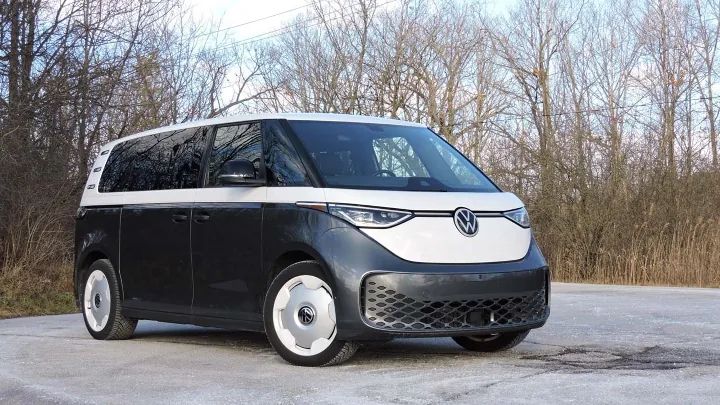
Women Think Electric Cars Are Slow: Study
Key points
- The Gender Divide Extends to Range Demands
- The Range Paradox: Daily Realities vs. Purchasing Thresholds
- Charging Speed as the Balancing Factor
- Financial Barriers and Market Normalization
Thanks in part to the millions of Tesla Model S drag racing videos that flooded YouTube a decade ago, perception of electric cars as glorified golf karts has changed. Or has it?
According to a new data from a new BMW commissioned study, there's a persistent perception gap between how male and female consumers regard electric vehicles.
Despite modern battery-electric powertrains delivering instant torque that systematically outpaces internal combustion engines, female car shoppers remain markedly skeptical, or unaware, of EV performance.
The nationally representative study of 1,005 American adults reveals that only 25% of women believe electric vehicles accelerate faster than comparable gas-powered models, compared to 52% of men. This variance highlights a clear communications divide for automakers: while instant power delivery is a fundamental engineering characteristic of electric motors, half of male consumers have absorbed the messaging compared to just a quarter of women.
To flip that number on it's head, according to the study a full 75% of women believe a comparable electric car is slower than a conventional gas version.
Age demographics mirror this divide. Demographically, younger buyers align far more closely with performance realities: 49% of Millennials and 47% of Gen Z recognize the acceleration advantage of EVs, compared to 33% of Gen X and 25% of Baby Boomers.
The Gender Divide Extends to Range Demands
The divergence in perception continues into battery capacity and driving range expectations. Men are significantly more demanding when it comes to total range thresholds, with 80% citing range as a deciding factor in their purchasing decision compared to 64% of women. Furthermore, half of male respondents (50%) require a minimum range of 300 miles before considering an EV, whereas only 35% of female respondents demand that same 300-mile benchmark.
The Range Paradox: Daily Realities vs. Purchasing Thresholds
This gender variance exists within a broader market paradox highlighted by the survey: a distinct disconnect between actual daily mileage needs and theoretical battery requirements.
While 73% of drivers state that 75 miles or less covers their daily driving routine (a distance easily satisfied by current battery capacities) 42% still demand at least 300 miles of range before considering an EV, showing that consumers purchase vehicles for edge-case road trips rather than daily utility. In fact, 18% want more than 400 miles of range, a preference that requires high-density battery packs which ultimately increase both overall vehicle weight and purchase price.
This gap demonstrates that "range anxiety" has evolved. Consumers are largely aware that daily commuting requires minimal capacity, yet they continue to price in safety margins for occasional long-distance travel.
Charging Speed as the Balancing Factor
Automakers looking to reduce battery sizes, and consequently vehicle costs, may find their solution in DC fast-charging performance rather than larger battery packs.
- 10-Minute Relief: 53% of all respondents state that adding 150 miles of range in a 10-minute charging stop would make them more likely to consider an EV.
- Youth Appeal: That figure rises to 70% among Gen Z and 65% among Millennials, compared to just 30% for Baby Boomers.
- Shifting Expectations: 55% of respondents now consider a total charge time of 30 minutes or less acceptable (up from 48% in 2025), while 76% accept one hour or less.
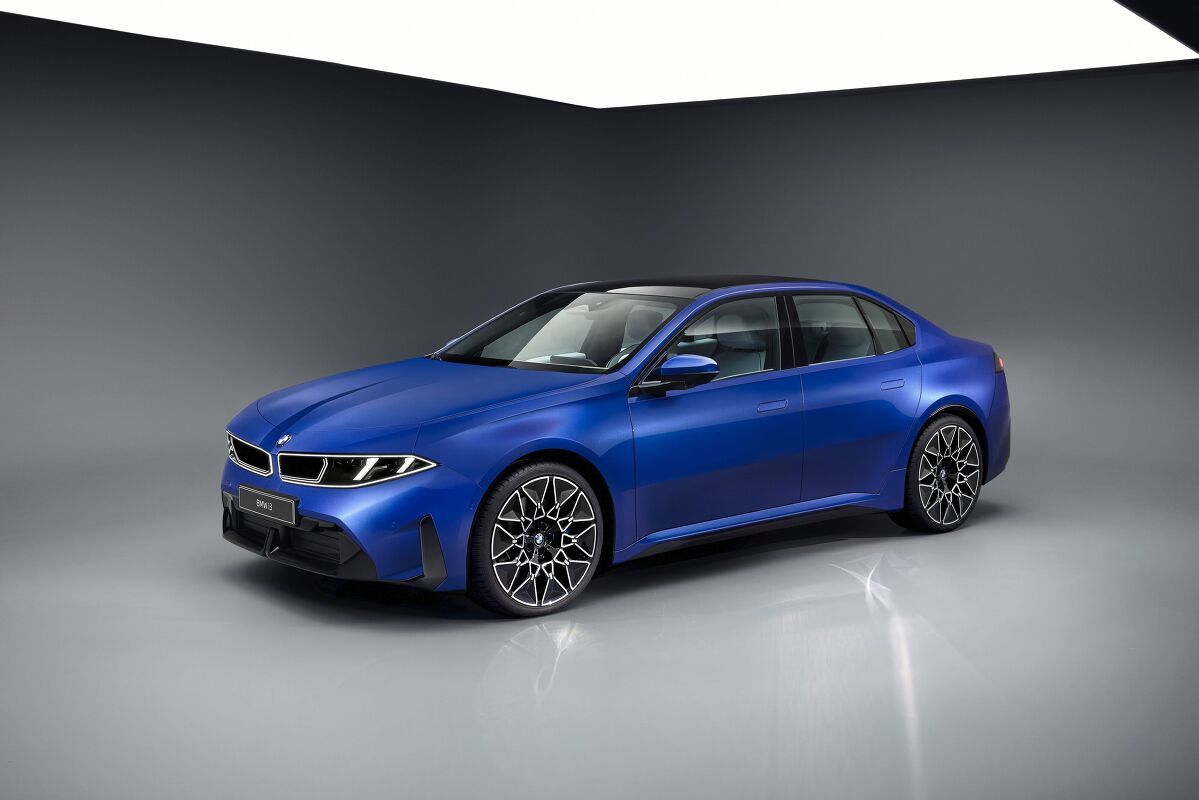
Modern 800-volt architectures are directly addressing these metrics. For instance, platforms like the new BMW iX3 are engineered to add roughly 185 miles of range in a 10-minute window at high-power DC stations.
Financial Barriers and Market Normalization
While technical capability improves, financial metrics remain the principal obstacle to widespread adoption.
| Barrier to EV Adoption | Share of Respondents (%) |
|---|---|
| Purchase Price | 51% |
| Battery Longevity / Replacement Cost | 31% |
| Charging Time | 26% |
| Driving Range | 24% |
| Public Charging Availability | 24% |
| Access to Home Charging | 23% |
To bypass initial cost hurdles, 55% of consumers report they would consider a certified pre-owned (CPO) or used EV if it provided meaningful savings. Overall, lower operating and fuel costs remain the primary motivator for EV consideration at 27%, followed by performance (19%), advanced technology (19%), and environmental benefits (19%).
Concurrently, mainstream market acceptance continues to shift. Only 56% of respondents still view EV buyers as "early adopters," down six percentage points from 62% in 2025. With 68% of Americans actively considering an electric vehicle for their next purchase, market dynamics are transitioning from novelty interest toward standard feature and value comparisons.